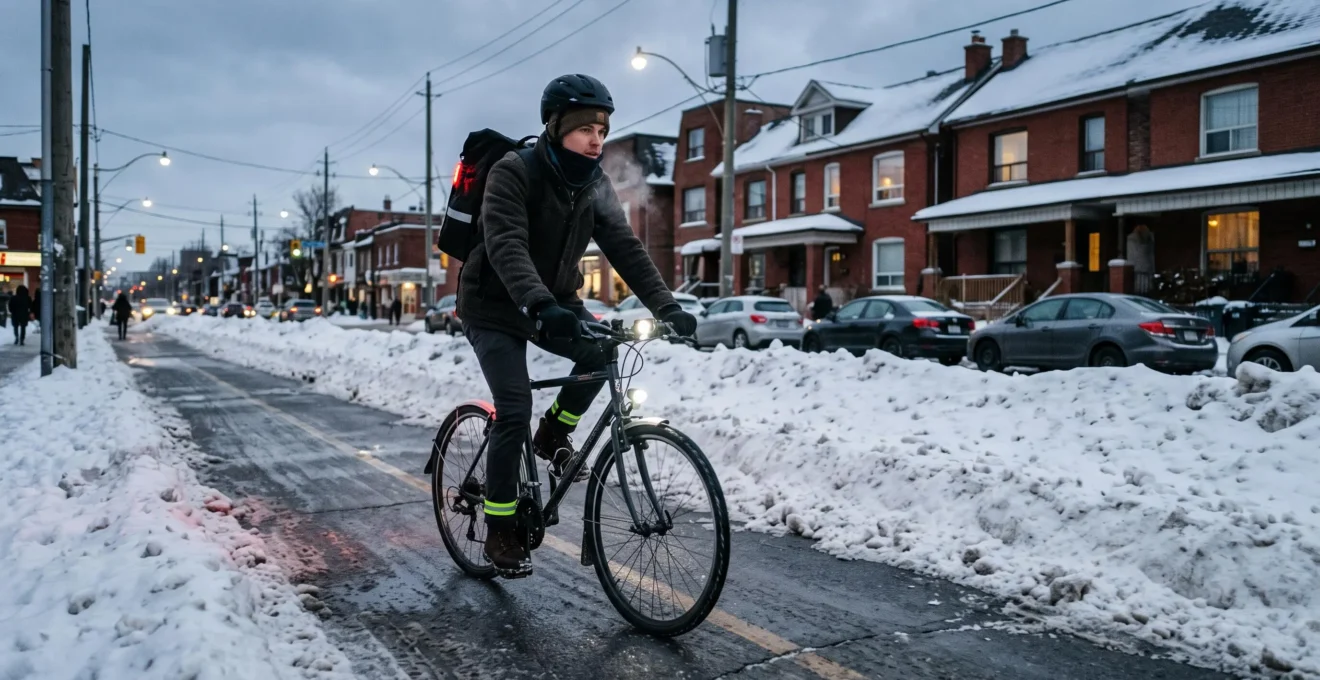
Replacing certain car trips with walking or cycling does not mean crossing an entire city on a bicycle in the middle of winter. In Canada, active transportation becomes truly sustainable when it aligns with everyday distances, available infrastructure, seasonal weather, and personal schedules.
The most approachable strategy identifies routine vehicle trips that could easily be handled differently, then tests alternatives step by step. A quick run to a neighborhood grocery store, a trip to a nearby transit station, and a daily bicycle commute have very different physical demands. Treating each scenario separately prevents setting unrealistic goals.
Safety is the decisive factor: a pleasant route in July can become impassable in January, while a city bus might easily bridge a difficult section of a trip. The objective is not to eliminate all motorized travel, but to build a reliable routine that withstands everyday life and Canadian seasonal swings.
Core principles for adopting sustainable active transportation
- Start with short, recurring trips before overhauling complex commutes.
- Choose your mode of transit based on real-world routes, infrastructure quality, weather, and backup options.
- Measure the car kilometers actually avoided rather than trying to achieve a perfect year-round record.
- Why Does Starting with Small Trips Increase the Odds of Long-Term Active Transit?
- How to Plan a Bike Commute to Arrive Prepared and Stress-Free
- Walking, Cycling, or Transit: Which Combination Fits a Short Trip Best?
- What Safety Precautions Matter Most When Walking or Biking in Darkness and Cold?
- When Should You Leave the Bike at Home Due to Weather and Road Conditions?
- How to Compare Travel Options When Driving Costs More in the Long Run
- How to Pack for a Daily Active Commute Without Overloading Your Bag
- How to Measure the Real Impact of Your Active Trips Beyond Symbolic Actions
Why Does Starting with Small Trips Increase the Odds of Long-Term Active Transit?
Starting with short trips allows individuals to test walking or cycling without upending their entire weekly schedule. Routes under 2 to 3 kilometers provide an accessible entry point when residential streets are safe and destinations are nearby. Repeating these short trips builds familiarity with routes, gear, and daily habits before attempting longer distances.
A short trip generally requires far less preparation than a long commute. It can often be completed in everyday clothes, without needing a shower at your destination or carrying specialized gear. However, distance alone is not the only factor: a dangerous intersection, a missing sidewalk, or a steep hill can make a short journey impractical.
The first step is auditing your actual weekly trips. Track routine grocery runs, pharmacy visits, school drop-offs, and walks to the nearest bus stop. The goal is separating easily convertible trips from those that demand substantial logistical planning.
This approach aligns with the recommendations from the Public Health Agency of Canada on active transportation, which encourage walking and cycling for everyday travel while considering community walkability, destination proximity, and infrastructure safety.
For example, someone who routinely drives to a nearby store might switch to walking for light grocery runs, reserving the car for bulk shopping. This tests a specific substitution without imposing rigid rules on all weekly travel.
Consistency compounds. Several short walks each week establish steady physical activity and help you identify the best footwear, timing, and neighborhood routes.
10.6 minutes per day
Observed difference in measured daily moderate-to-vigorous physical activity among Canadian adults aged 18 to 64 who use active transportation: 33.4 minutes per day compared to 22.8 minutes for non-users. This represents an empirical population association, not a guaranteed individual outcome.
Public Health Agency of Canada, study published in 2025 using data collected between 2014 and 2019: a Canadian study on active transportation and physical activity.
A frequent mistake is starting with the most difficult journey: a long commute during rush hour in heavy traffic or bad weather. Failing on an exhausting route leads people to abandon simpler trips that were entirely practical.
Once a few short local routes become second nature, a bike commute can become a realistic next goal, provided you plan it carefully.
How to Plan a Bike Commute to Arrive Prepared and Stress-Free
A daily bike commute should be test-driven on a weekend before becoming a workday habit. The best route is rarely the shortest path on a map: it should feature manageable intersections, separated bike lanes, and a predictable travel time compatible with your workday. Packing the right gear, having a change of clothes, and maintaining a backup plan eliminates the surprises that cause morning stress.
A digital mapping app provides an initial travel estimate, but it cannot reveal real-world bottlenecks. Ride the proposed route on an off-day to gauge road surfaces and sightlines, then observe vehicle traffic during peak morning and evening rush hours.
Compare three potential routes:
- The shortest route: Minimizes distance, but often funnels you onto high-speed arterial roads.
- The safest route: Prioritizes protected bike lanes, multi-use pathways, and quiet residential streets.
- The most comfortable route: Avoids steep hills and poor pavement, even if the detour adds a few minutes.
In Canadian cities, winter maintenance requires extra attention. A protected bike lane that is smooth in July may become an unplowed snow storage bank in January. Check your municipality’s winter clearing priorities and establish alternative streets when your primary path is blocked by snow or ice.
Essential gear includes a roadworthy bicycle, tuned brakes, puncture-resistant tires, a dependable U-lock, full-coverage fenders, and front and rear lights that comply with local road regulations. Wearing technical layers allows you to adjust your body temperature as you warm up, accommodating the difference between a brisk morning start and a warm afternoon return.
At your workplace, secure bike parking, lockers, and shower facilities make commuting easier. If showers are unavailable, keeping a change of clothes at your desk or using a municipal bike-share system for one-way trips can resolve logistical hurdles.
Combining cycling with public transit is also effective, though rules regarding onboard bicycles, peak-hour restrictions, and bus front-rack availability vary by transit authority and should be verified in advance.
Even a well-planned route will be impractical on certain days. Being flexible enough to switch between cycling, walking, and public transit is far more sustainable than forcing a single mode year-round.
Walking, Cycling, or Transit: Which Combination Fits a Short Trip Best?
For trips of a few kilometers, walking is best suited for short, accessible journeys, while cycling becomes efficient as distances increase and safe infrastructure is present. Public transit bridges the gap when routes involve steep hills, bad weather, or disconnected paths. The best choice balances door-to-door travel time, out-of-pocket costs, and safety.
The following distance benchmarks serve as practical planning guidelines rather than rigid rules:
| Indicative Distance | Mode to Evaluate | Critical Decision Factors |
|---|---|---|
| Under 1 km | Walking | Sidewalk clearing, crosswalks, accessibility, and surface ice |
| 1 to 3 km | Walking or Cycling | Available travel time, secure bike parking, and route comfort |
| 3 to 7 km | Cycling or Multi-Modal | Protected bike lanes, hills, weather, and cargo capacity |
| Beyond 7 km or broken routes | Public Transit + Walking/Biking | Bus frequency, transfer wait times, and station access |
Driving can seem faster when looking only at behind-the-wheel GPS time, but a fair calculation must include brushing off snow, scraping windows, scraping for parking, and walking from your parking spot. Conversely, riding transit requires budgeting for the walk to the bus stop, schedule headway buffers, and the final walk to your destination.
Pairing walking with public transit is an effective way to access commuter rail, subway, or express bus lines. This incorporates physical activity into your morning routine without requiring you to walk the entire distance.
Out-of-pocket costs also shape the decision. A personal bicycle requires upfront capital, maintenance, accessories, and a lock. If you already purchase a monthly transit pass for work, using transit for intermediate weekend trips incurs zero marginal cost.
Finally, consider elevation, wind, accompanied children, and cargo weight. A commuter might walk on a brisk morning, take the bus home in the evening, and cycle on clear days.
This modal choice changes with the seasons: when sub-zero temperatures, darkness, and winter road conditions arrive, safety preparations take priority.
What Safety Precautions Matter Most When Walking or Biking in Darkness and Cold?
During cold and dark winter months, active transit safety relies on three pillars: being clearly visible to drivers, maintaining tire and footwear traction, and dressing in breathable layers. In Canada, winter travel combines icy surfaces with early sunsets. Functional lighting, reflective materials, appropriate tires, and early braking must be verified before stepping out the door.
Visibility is paramount when sunset occurs before the afternoon commute ends. Cyclists must be clearly visible from the front, rear, and sides. Reflective sashes, ankle bands, and jackets improve visibility, but they do not replace legal headlight requirements.
In Quebec, the Highway Safety Code requires a white front light or reflector and a red rear light or reflector when cycling at night. The SAAQ guidelines on winter cycling also emphasize tire choices, gentle braking, and anticipating slippery surfaces. Check road safety requirements in your specific province or territory.
Tires designed for winter conditions improve control, though they cannot defy physics on pure ice. Dropping tire pressure slightly within the manufacturer’s recommended PSI range broadens the tire contact patch on packed snow. Progressive braking, gentle turns, and doubling your following distance are essential winter riding habits.
Black ice is often invisible under light dustings of snow. Metal utility covers, bridge expansion joints, rail tracks, and painted road markings become slick when wet or cold. At intersections, piled snowbanks narrow travel lanes and obscure driver sightlines.
Winter dressing requires balancing wind protection with moisture management. For active cycling or brisk walking, wearing breathable, moisture-wicking layers under a windproof shell is far better than wearing a heavy down parka. Sweat trapped against your skin cools rapidly the moment you stop at a red light.
Protect your extremities: insulated windproof gloves, warm winter boots, and a thermal skull cap under your helmet maintain warmth without restricting head rotation, peripheral vision, or hand dexterity on brake levers. For walking, boots with winter rubber compounds or slip-on traction cleats keep you upright on icy sidewalks.
Even with thorough preparation, certain severe weather events exceed what winter gear can handle. Knowing when to choose an alternative mode is a vital safety skill.
When Should You Leave the Bike at Home Due to Weather and Road Conditions?
You should leave your bicycle at home when freezing rain, thick black ice, blizzards, or zero-visibility conditions compromise road safety. Your decision should account for current road conditions and the forecast for your return trip, rather than morning weather alone. Having a bus pass, carpool option, or remote-work flexibility prevents taking reckless risks in hazardous conditions.
Cold temperatures and falling snow do not make cycling impossible on their own. Many commuters ride comfortably all winter on well-maintained, plowed bike networks with studded tires. However, severe black ice, active freezing rain, or heavy unplowed snowdrifts that force you into high-speed traffic lanes make cycling dangerous, regardless of experience.
Check four conditions before setting out: wind chill, road surface conditions, visibility, and the forecast for your evening return commute. A clear, dry street at 7:00 AM can become an icy hazard by 5:00 PM if temperatures hover around the freezing mark.
Differentiate between physical discomfort and real danger. Sub-zero temperatures can be addressed by adding a fleece layer or thermal balaclava. Zero traction on an unplowed bridge requires changing your route or switching to public transit.
Establish a backup plan in advance. Knowing your local bus route, keeping transit fare on your phone, or having approval to work remotely allows you to make calm, safe choices without feeling pressured to ride in bad conditions.
Daily active transit decision checklist
- Check weather forecasts for your departure and return commutes, noting temperature and precipitation timing.
- Check municipal road reports, identifying sections prone to ice, deep slush, or delayed snowplowing.
- Inspect your bike’s lights, tire pressure, and brakes, confirming you have your warm gloves and reflective gear.
- Verify your backup transit option, checking local bus schedules or road conditions.
- Make a conscious choice—bike, walk, transit, or stay home—and stick to it without second-guessing.
The goal is not to force yourself to ride a bicycle 365 days a year. Building a flexible routine where you ride when safe, take transit during snowstorms, and walk when convenient creates a sustainable lifestyle that lasts.
This flexibility also informs the financial trade-offs: an active transportation routine that seems inexpensive on paper must be weighed against total annual household vehicle expenses.
How to Compare Travel Options When Driving Costs More in the Long Run
Comparing transportation options requires looking past immediate daily expenses to audit total annual costs. An existing vehicle may seem practically free for a quick neighborhood errand, but it incurs ongoing fuel, maintenance, insurance, and parking costs. However, replacing a few discretionary trips does not eliminate overhead: significant financial savings emerge when you reduce vehicle reliance enough to downsize household vehicle ownership.
Automobile ownership carries fixed overhead that must be paid whether the car moves or sits parked: registration, financing interest, collision insurance, and vehicle depreciation. Variable costs—gasoline, oil changes, tire wear, and parking fees—scale directly with the mileage driven.
Active transportation operates on a different financial model: bicycle acquisition, maintenance, locks, and accessories. Walking requires little specialized gear beyond weather-appropriate outerwear and supportive shoes.
Public transit introduces a predictable cost structure through single fares, multi-ticket packs, or monthly unlimited passes.
The guidance from the Office of Consumer Affairs on vehicle budgeting advises consumers to audit insurance, scheduled maintenance, unscheduled repairs, fuel, depreciation, and parking fees. It highlights carsharing services and occasional rentals as flexible alternatives to private vehicle ownership.
Financial modeling must evaluate two distinct scenarios:
- Keeping your car: Financial savings are limited to avoided gasoline, reduced parking fees, and extended intervals between scheduled maintenance.
- Eliminating a household vehicle: Substantial savings unlock as insurance premiums, vehicle loan payments, and annual registration fees disappear completely.
To run a personal financial audit, sum your annual vehicle expenses and divide by your yearly trips. This calculation reveals your true cost per trip, but does not represent the marginal cash saved by replacing an occasional drive with a walk.
A second, more realistic calculation subtracts the operating costs that actually disappear from your budget, offset by any new transit fares, bike tune-ups, or carshare memberships. This prevents overestimating your immediate financial return.
Factoring in downtown parking fees, lost time spent sitting in rush-hour traffic, and the physical health benefits of daily active mobility provides a complete picture, even if those quality-of-life benefits are difficult to quantify on a balance sheet.
Once you settle on a commuting routine, managing daily gear and luggage becomes the primary factor in everyday comfort.
How to Pack for a Daily Active Commute Without Overloading Your Bag
Packing for a daily active commute requires carrying only the essentials for the journey while leaving heavy items at your destination. Storing work clothing, toiletries, and shoes in an office locker lightens your commuter bag, makes leaving the house faster, and simplifies dressing for Canadian seasons.
A functional commuter loadout covers four categories: weather protection, hydration, basic emergency tools, and personal essentials. Every packed item should address an operational need on that day’s route.
A packable waterproof rain jacket provides an emergency shell if clouds roll in. A compact water bottle covers hydration without excessive weight. For cyclists with basic mechanical skills, a compact multi-tool, tire levers, a spare tube, and a mini-pump prevent a flat tire from stranding you, provided you know how to use them.
Carrying extra gear is counterproductive. On a 5-kilometer commute, lugging multiple changes of clothing, heavy locks, and tools you do not know how to use turns a brisk commute into an uncomfortable workout.
The permanent locker kit strategy stores heavy everyday items at your workplace: dress shoes, work trousers, hygiene supplies, and a spare phone charger. If you have access to an office locker, your daily commute bag only needs to hold your wallet, keys, phone, and lunch.
When cycling, mounting waterproof panniers on a rear rack is more comfortable than carrying a heavy backpack. Panniers lower your center of gravity, eliminate back sweat, and relieve shoulder strain. Distribute cargo weight evenly between left and right panniers to preserve bicycle handling.
In winter, extra gloves, neck warmers, and dry socks require slightly more pack space. In summer, carrying adequate water and sunscreen takes priority.
Audit your gear seasonally to remove items you have not used in weeks. The goal is maintaining a lightweight, predictable kit that makes getting out the door effortless.
As these trips become part of your normal week, tracking your avoided vehicle kilometers provides concrete data on your progress.
Principles for tracking your active transportation
- A walk or bike ride counts as vehicle displacement only if it genuinely replaces a trip that would have otherwise been driven.
- Consistency on practical, safe routes matters far more than attempting to commute actively every single day of the year.
- Use your tracking to refine routes, clothing, and transit backups, rather than just calculating vanity carbon numbers.
How to Measure the Real Impact of Your Active Trips Beyond Symbolic Actions
The true environmental and financial impact of active transit is measured by tracking the motor vehicle trips you genuinely replace with walking, cycling, or public transit. A simple notebook log recording trip distance, destination, and weather obstacles helps you assess progress, identify recurring route challenges, and optimize your routine.
Logging every bicycle ride does not equal avoided car use. A leisurely weekend ride on a recreational path improves fitness, but it does not displace a vehicle trip. Focus on tracking trips that were previously completed behind the wheel.
A monthly transit log should capture four points: destination, round-trip distance, travel mode used, and which vehicle trip was displaced.
Hypothetical case study: tracking displaced vehicle kilometers
An individual regularly drives to a neighborhood market located 2 kilometers away. They switch to walking for that specific errand once a week, logging a 4-kilometer round trip.
Over a four-week month, that single habit replaces 16 kilometers of vehicle travel, provided no extra driving trips are made for forgotten groceries. This tracks actual vehicle kilometers eliminated, rather than an unverified carbon offset claim.
Your tracking log also acts as an operational troubleshooting tool. If you find yourself consistently driving for a specific errand, identify the friction point: awkward timing, heavy groceries, poor bike parking, missing winter snowplowing, or uncoordinated bus schedules.
These observations point to practical fixes: installing a rear bike rack and cargo basket for heavier groceries, picking a calmer residential street, or adjusting errand times to avoid school zones.
From a sustainability perspective, separate displaced vehicle kilometers from estimated carbon emission reductions. Calculating verified greenhouse gas savings requires knowing vehicle fuel efficiency, fuel type, and engine temperature (short trips on cold engines generate disproportionate emissions). Tracking displaced vehicle mileage provides a reliable baseline without overcomplicating the math.
Focusing on symbolic actions—such as carrying a metal straw while driving to work every day—distracts from high-impact operational changes. Replacing a short daily vehicle trip with walking or transit delivers verified, compounding reductions in traffic, fuel spend, and emissions.
Finally, avoid treating saved emissions as a moral license to consume more elsewhere. The objective is establishing a sustainable transportation routine that fits your lifestyle, without turning daily mobility into a performance.
The next step is logging your routine vehicle trips for one week, choosing a single manageable errand to convert to walking or cycling, and reviewing your experience after thirty days. That initial audit will help you tailor your gear, routes, and seasonal transitions to your community and personal capabilities.
Can you adopt active transportation in Canadian cities without nearby bike lanes?
Yes. Many daily trips can be completed on foot or by pairing walking with public transit, depending on neighborhood connectivity and sidewalk clearing. However, an absence of separated bike lanes or traffic-calmed residential streets can make cycling unsafe. Review your route on foot or by car before attempting to ride in traffic.
Do you need an expensive bicycle to start commuting?
No. A reliable, well-maintained commuter or hybrid bicycle equipped with working brakes, front and rear lights, a bell, and a solid lock is sufficient for most urban commutes. Public bike-share systems are also an affordable way to test routes before buying a bike. Verify your route needs before investing in specialized gear.
Is year-round winter cycling feasible across Canada?
Feasibility depends on your local climate, municipal snow-clearing standards, winter gear, and personal comfort. Studded tires, thermal layers, and careful riding make winter cycling possible on plowed routes in many cities, but freezing rain and unplowed blizzards require switching to transit or walking.
How can you haul groceries without using a car?
Small, frequent grocery trips can be carried in a supportive backpack. For larger trips, waterproof bicycle panniers, a sturdy front basket, or a two-wheeled grocery cart handle substantial loads. Dividing grocery purchases across two shorter trips during the week makes carrying food easier and keeps produce fresher.
Does it make a difference to walk or cycle only two or three days a week?
Yes. Commuting actively even two days a week displaces dozens of vehicle trips over a year, cuts fuel spend, and adds consistent physical activity to your week. A 2025 Canadian health study documented a significant positive association between active transportation and overall physical activity levels. An adaptable routine matched to your schedule is far more sustainable than aiming for perfection.